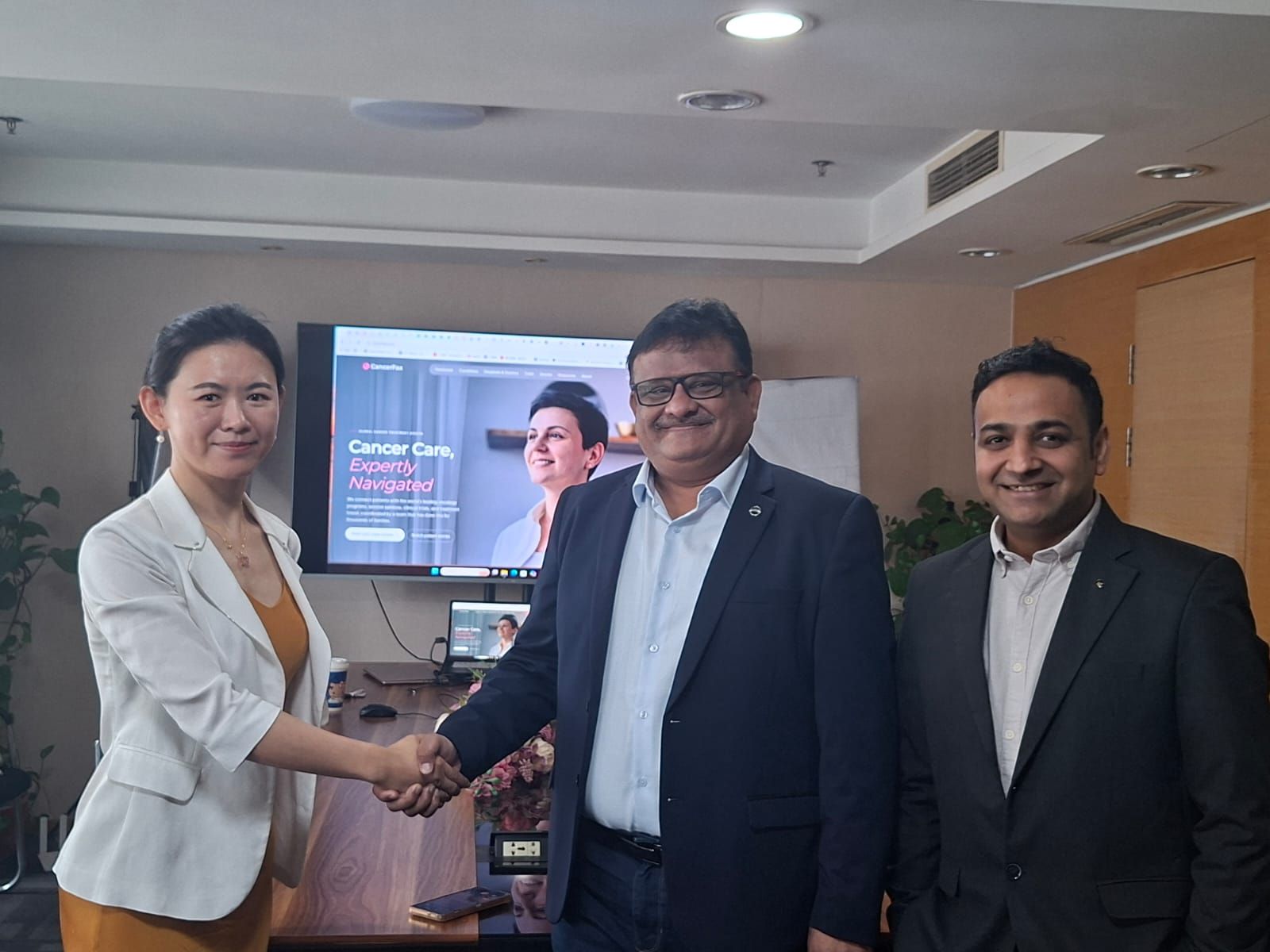
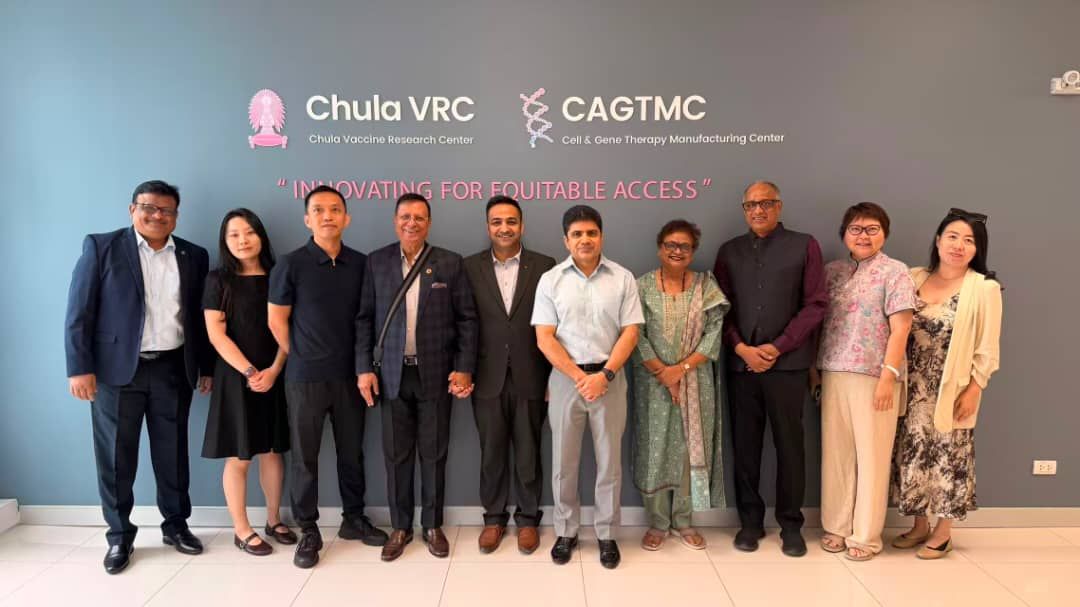
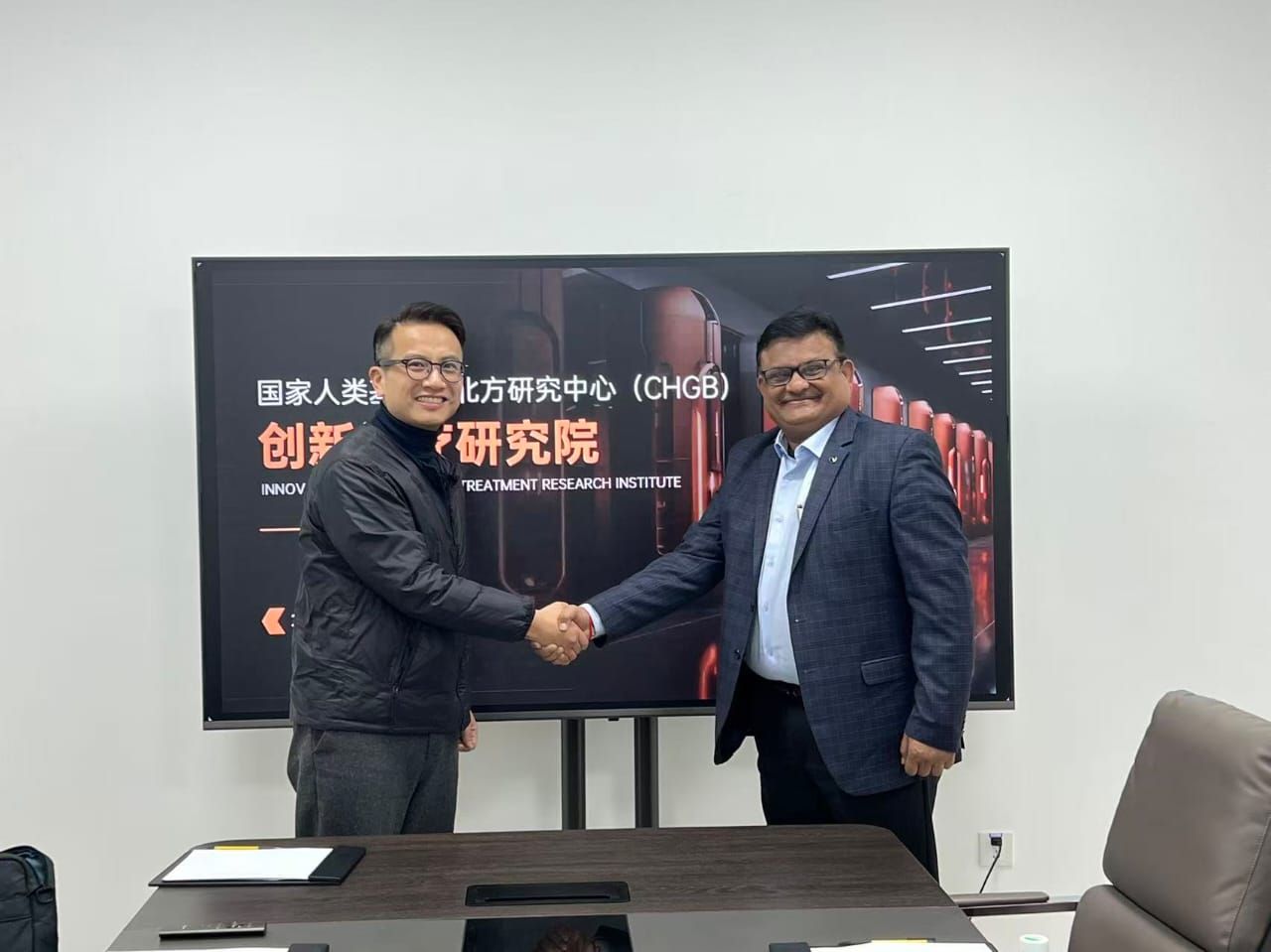
CancerFax Visits Shenzhen Children's Hospital BMT Center and Meets Prof. Liu Sixi
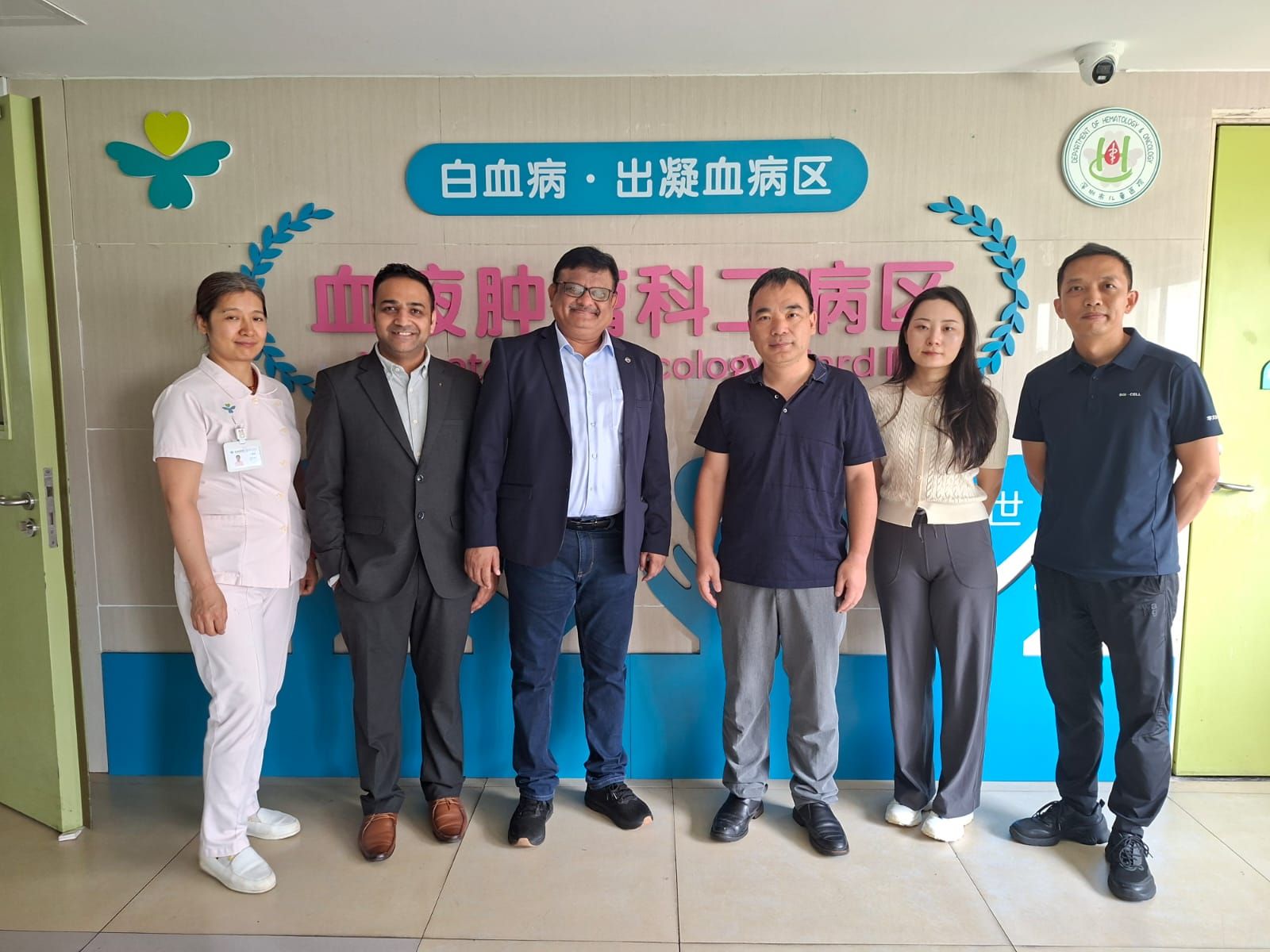
A visit focused on advanced care for children with thalassemia.
A CancerFax team led by Founder Sandeep Kumar Wamne and Co-Founder Nishant Mittal (PhD) recently visited the Bone Marrow Transplant Center at Shenzhen Children's Hospital to meet Prof. Liu Sixi — a leading bone marrow transplant and gene therapy specialist — and to understand the progress his team has made in treating children with severe thalassemia and other complex blood disorders.
The visit was accompanied by Mr Liu Chao (CEO, HemoGen) and Ms Mary Zhang (Director of International Cooperations, HemoGen) — the biotechnology partner behind the gene therapy approach used at the center. Their presence allowed the discussion to cover both the clinical side and the science behind it.
It was a warm and informative meeting. The group spent time learning how the program is run, how children are evaluated and prepared, and how families are supported through what is often a difficult and emotional journey.
Why this visit matters
Thalassemia is one of the most common inherited blood disorders in the world. In its severe form — transfusion-dependent beta-thalassemia — children depend on regular blood transfusions and ongoing iron-removal treatment throughout their lives. For many families, years are spent searching for better options.
For a long time, the only potentially curative path was a bone marrow or stem cell transplant from a matched donor. Newer approaches, including gene therapy using a child's own stem cells, are now changing what is possible.
Meeting Prof. Liu Sixi and his team in person, and seeing how the program actually works, helps CancerFax support families with honesty and clarity rather than secondhand claims.
About Prof. Liu Sixi
Prof. Liu Sixi, MD, PhD is a Chief Physician at Shenzhen Children's Hospital, directing the Department of Hematology and Oncology and the Department of Transfusion Medicine. He brings more than two decades of experience in childhood cancers, blood disorders, and hematopoietic stem cell transplantation.
His training spans Queen Mary Hospital (University of Hong Kong), Nanfang Hospital (Southern Medical University), and Children's Hospital Los Angeles. He has authored more than 70 peer-reviewed papers and leads the hospital's gene therapy program for severe beta-thalassemia in collaboration with HemoGen.
About Shenzhen Children's Hospital
Shenzhen Children's Hospital is one of South China's largest pediatric specialty centers and the first tertiary A-level pediatric hospital in Guangdong Province. Its Department of Hematology and Oncology manages childhood blood disorders and cancers including leukemia, lymphoma, severe thalassemia, aplastic anemia, and other inherited blood conditions.
The bone marrow transplant program combines clinical care with active research and international scientific exchange — making it an experienced and well-established center for complex pediatric hematology.
Treatment options for thalassemia — simply explained
For children with severe thalassemia, there are now two main curative-intent approaches.
Bone marrow and stem cell transplant
Healthy blood-forming stem cells from a matched donor — sibling, haploidentical family member, or cord blood — replace the child's own cells, allowing the body to produce healthy red blood cells. Transplant has helped many children, but finding a suitable donor and managing risks such as graft-versus-host disease require an experienced center and careful planning.
Gene therapy
Gene therapy takes a different route. Instead of a donor, it uses the child's own stem cells. Doctors collect the child's blood-forming stem cells, add a working copy of the gene needed for healthy hemoglobin in a specialized lab, and return the modified cells after conditioning treatment. Because no matched donor is required, there is no risk of graft-versus-host disease.
In clinical programs including Prof. Liu Sixi's team, this approach has reported transfusion-independent outcomes in treated children. Results vary from patient to patient, and long-term follow-up remains important.
Important limitations
It is just as important to be honest about the limits of these treatments.
Neither option is suitable for every child — eligibility depends on diagnosis, disease severity, age, overall health, and specialist evaluation. The conditioning chemotherapy carries real risks including effects on fertility. These treatments are delivered only at a small number of highly specialized centers, and they can be costly with availability varying by country.
Whether a specific child may be suitable can only be confirmed after complete investigations and review by an experienced hematology and transplant team.
About HemoGen
HemoGen is a biotechnology company within the BGI Group, focused on gene therapy for inherited blood disorders — particularly transfusion-dependent beta-thalassemia. HemoGen developed the gene-modified autologous stem cell approach used in collaboration with Prof. Liu Sixi's team, bringing together vector design, manufacturing, and close clinical collaboration.
How CancerFax can help
CancerFax helps international families coordinate consultations and treatment access at experienced centers such as Shenzhen Children's Hospital. The aim is never to replace a treating doctor — it is to help families move from confusion toward confident, well-informed next steps.
Where appropriate, CancerFax supports families with medical record review and specialist case summaries, second opinion coordination, clinical trial and gene therapy eligibility checks, travel and visa assistance, on-ground translator support, and post-treatment follow-up coordination.
Any decision about transplant or gene therapy should be made with a qualified hematology or oncology specialist after complete investigations.
Contact: [email protected] | WhatsApp / WeChat: +86 182 1759 2149
Sources: FDA, NHLBI, ClinicalTrials.gov, Human Gene Therapy, American Journal of Hematology.