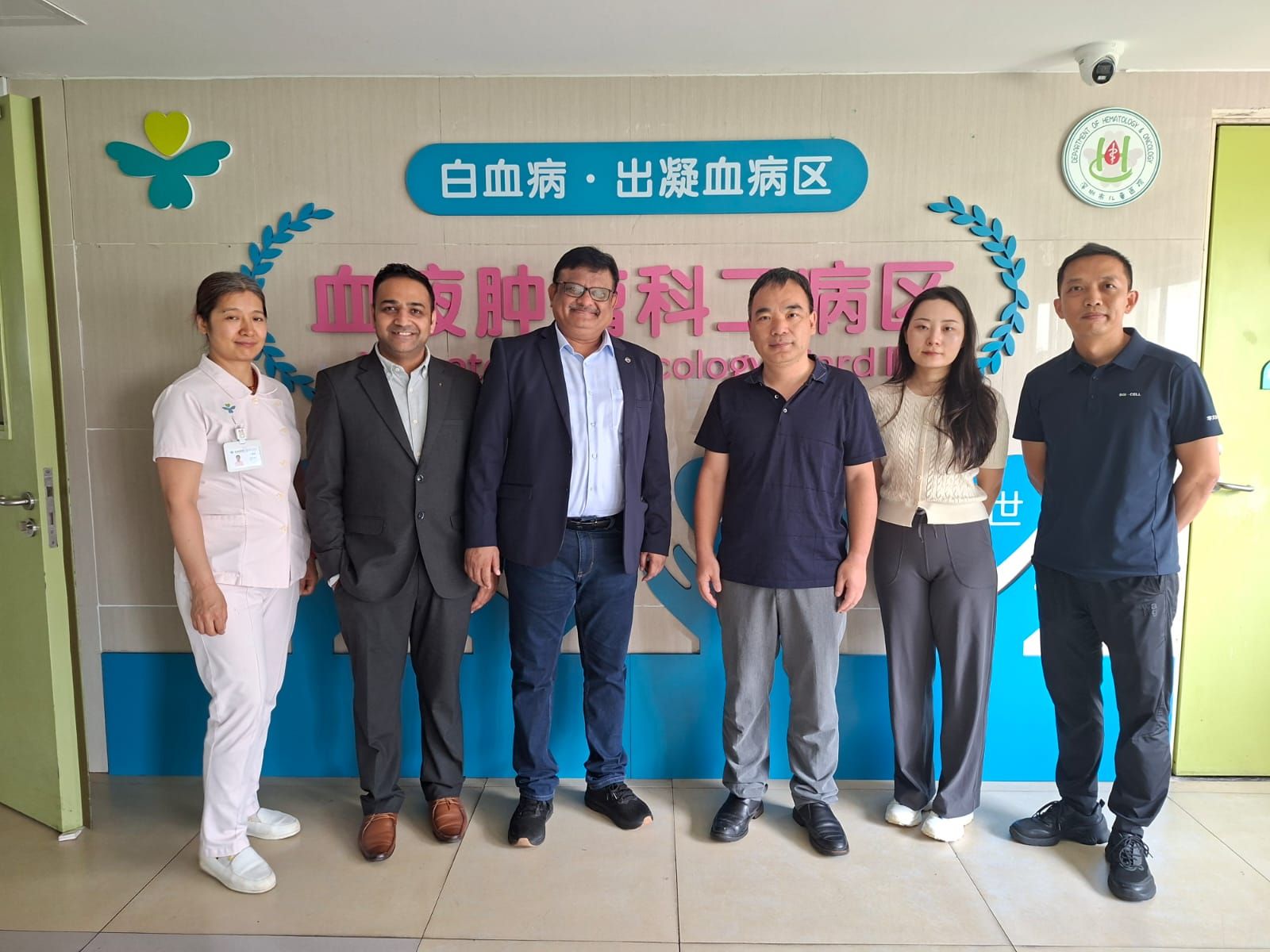
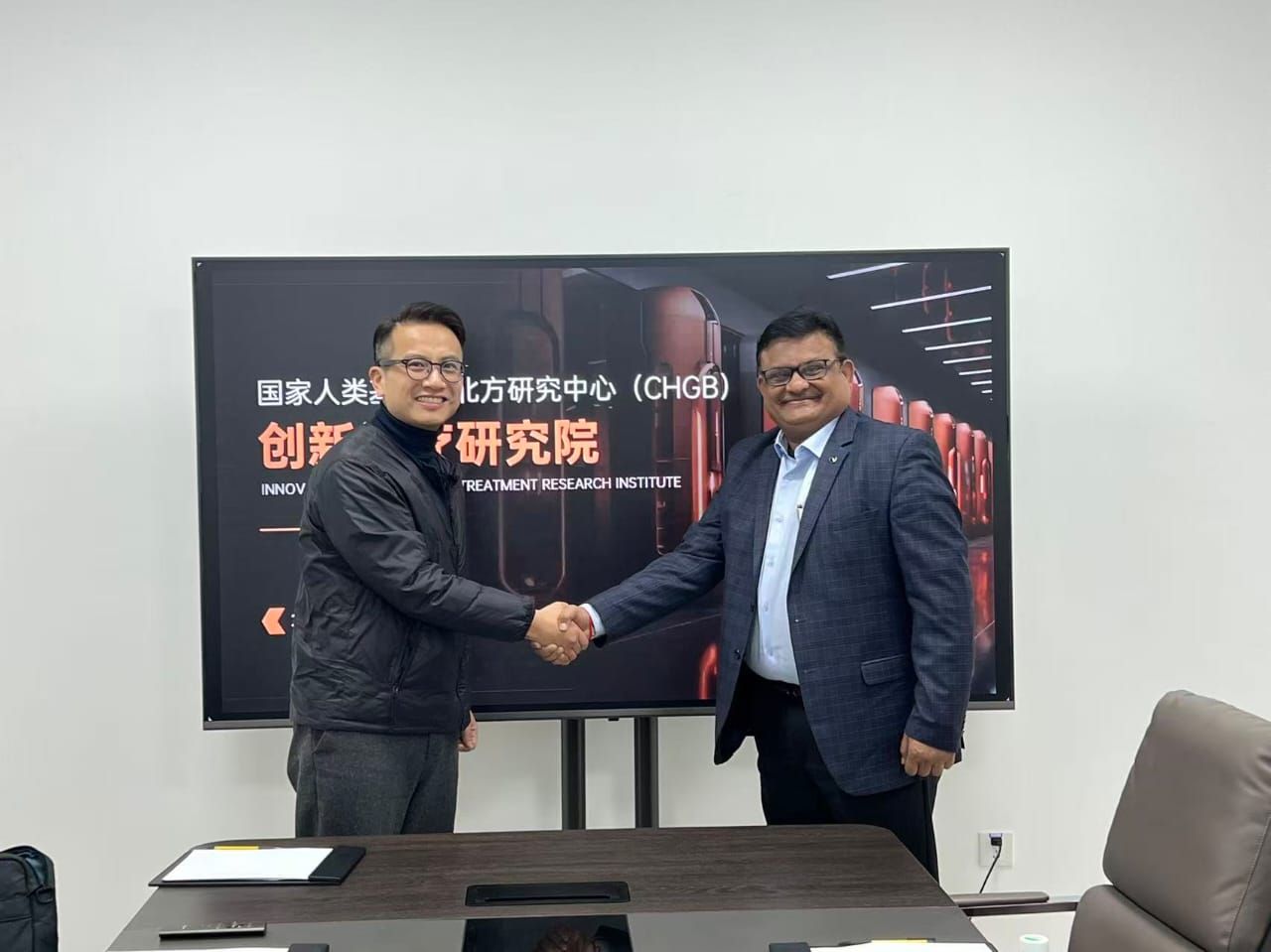
CancerFax Team Visits Chula Cell and Gene Therapy Center in Bangkok
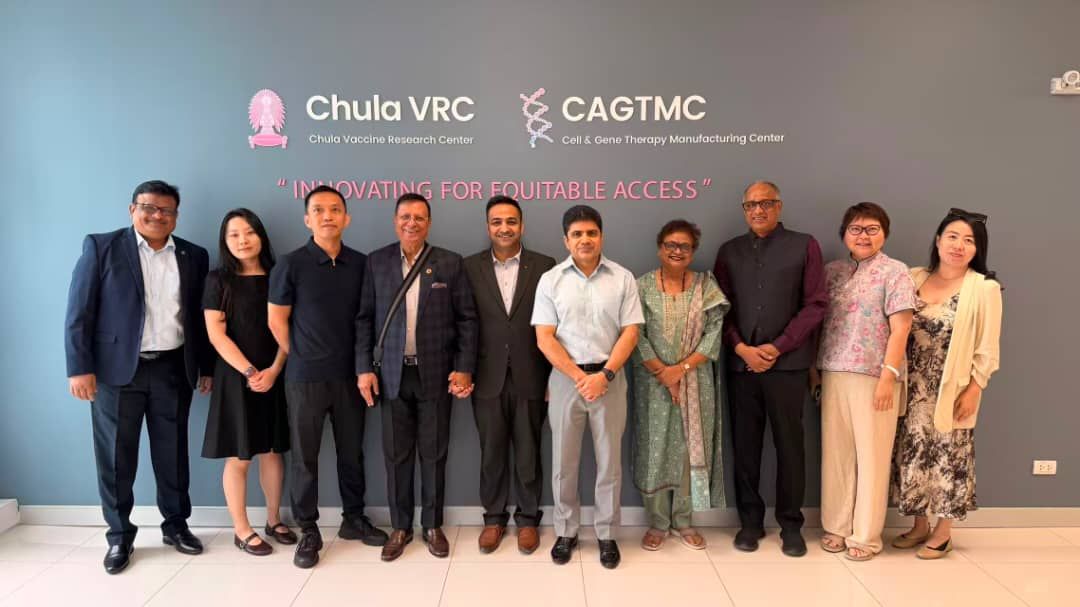
A meaningful visit focused on the future of thalassemia care.
A team led by CancerFax founder Sandeep Kumar Wamne and co-founder Nishant Mittal (PhD) recently visited the Chula Cell and Gene Therapy Center in Bangkok. The purpose was simple and important — to understand, first-hand, the progress being made in gene therapy for thalassemia and how these advances can eventually reach more patients and families who need them.
The CancerFax team was joined by Dr Sunil Bhat, Dr Chandrakant (President, Thalassemia Society of India), Liu Chao (CEO, Beijing Genome Institute), and his colleague Mary. Together, the group spent time with the Chula team learning about their research, clinical experience, and the practical realities of delivering gene therapy for inherited blood disorders.
Why this visit matters
Thalassemia is one of the most common inherited blood disorders in the world. In its more severe forms — such as transfusion-dependent beta-thalassemia — patients rely on regular blood transfusions throughout life, along with iron-removal (chelation) treatment. This is a heavy burden, especially across South Asia, Southeast Asia, and the Middle East.
For decades, the only potentially curative option was a matched bone marrow or stem cell transplant. Gene therapy has now opened a genuinely new chapter, and the field is moving quickly.
Seeing how a modern cell and gene therapy program is built and run — and speaking directly with the people doing the work — helps the CancerFax team support patients with honesty and clarity rather than secondhand information.
What the team focused on
During the visit, the group looked closely at how gene therapy for thalassemia is delivered in practice. Conversations covered the underlying science and laboratory processes, how patients are selected, prepared, and monitored, and the human side of access, affordability, safety, and long-term follow-up.
Bringing together a founder team, an experienced clinician, a patient-community leader, and a genomics partner kept the discussion grounded in both scientific promise and real-world patient experience.
Gene therapy for thalassemia — simply explained
Gene therapy aims to address the root cause of thalassemia rather than only managing its symptoms.
Doctors collect the patient's own blood-forming stem cells. In a specialized lab, these cells are modified to produce healthy hemoglobin. The patient then receives conditioning treatment to prepare for the modified cells, which are returned and begin producing functional hemoglobin.
Because the therapy uses the patient's own cells, no matched donor is required, and there is no risk of graft-versus-host disease.
For eligible patients, gene therapy may offer transfusion independence after a single treatment course — a remarkable shift for a condition that has long meant lifelong dependence on transfusions.
Important limitations
It is just as important to be honest about what gene therapy does not do.
It is not suitable for every patient — eligibility depends on diagnosis, severity, age, and overall health. The conditioning chemotherapy carries real risks, including effects on fertility. These therapies are delivered only at a small number of highly specialized centers, they are currently very expensive, and availability varies by country. Long-term data continues to mature.
How CancerFax can help
CancerFax can help families by reviewing medical records, arranging specialist second opinions, explaining treatment options in plain language, and coordinating with experienced international centers.
The aim is never to replace a treating doctor. It is to help patients move from confusion toward confident, well-informed next steps.
Any decision about gene therapy should be made with a qualified hematology or oncology specialist after complete investigations.