

Marina
Age 61 · Female
"“When hope felt distant after relapse, the team here gave me strength, clarity, and a second chance. Their care, precision treatment, and constant support changed my future.”"
A 61-year-old Russian patient with relapsed T-ALL became free of detectable cancer after receiving advanced CD7 CAR-T cell therapy in China, showing promise for treating leukemia that comes back after a
The Diagnosis
A Russian woman named Marina is 61 years old. She started a long and difficult treatment regimen after receiving the diagnosis of acute T-lymphoblastic leukemia (T-ALL).
After a Transplant, When Difficulties Reared
An allogeneic hematopoietic stem cell transplant was performed in Marina's home country in April 2025. It represented a significant advancement that offered her and her loved ones the possibility of a long-term remission.
A small but worrying number of malignant cells (0.014%) was found in her bone marrow three months later during follow-up testing, which demonstrated detectable residual disease (MRD). The disease kept showing signs of progression, despite local immunotherapy attempts. Mild skin graft-versus-host disease also developed in Marina at the same period.
Treatment choices are limited, and the issue gets considerably more complex for elderly patients who encounter immune-related recurrences after transplantation.
Taking a Second Look at Chinese Medicine
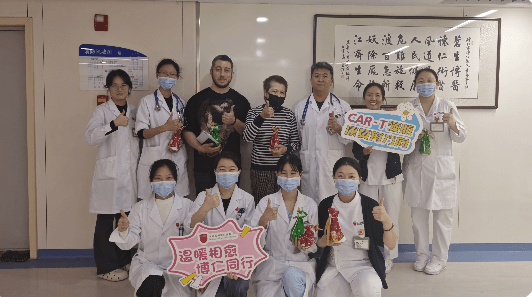
Marina went to China for more testing after giving it a lot of thought. Dr. Zhao Defeng of GoBroad Healthcare Group headed a multidisciplinary team that reevaluated her illness in great detail. The results showed that her leukemia cells primarily expressed the CD7 antigen.
After extensive consultations with Marina, the medical staff began by administering immuno-targeted treatment in an effort to stabilize her health. The decision to move forward with CD7 CAR-T cell therapy was then taken after reviewing her disease profile and treatment history.
In order to provide highly personalized risk assessment and clinical care, the GoBroad team has a wealth of expertise treating T-cell malignancies with CAR-T cell treatment. This includes complicated cases involving elderly patients and post-transplant relapse.
Treatment and Side Effects: A User's Guide
Due to the rapid proliferation of the CAR-T cells put into Marina's body, she experienced a high temperature shortly after the procedure. A transient decrease in oxygen levels and fever—the main symptoms of cytokine release syndrome (CRS)—were her most severe side effects.
She had preexisting heart and lung issues, so the medical staff kept a careful eye on her and acted quickly when necessary. Marina was able to complete the CRS phase without any major issues thanks to the standardized and meticulous management.
An Important Marker
The absence of MRD on day 13 following CAR-T infusion was indicative of complete remission, as confirmed by a bone marrow biopsy.
Meanwhile, eight genetic alterations that had gone undiscovered were found using next-generation sequencing (NGS) that covered over 300 genes. Important new directions for treatment planning, such as the development of tailored medicines, have been illuminated by these results.
Anticipating the Future
Now that she has gotten a good reaction, Marina will go back to her house to get ready for another stem cell transplant. The medical team advised her to begin maintenance treatment with targeted medications soon after her transplant in order to lower her chance of recurrence and aid in long-term disease control, taking into account her unique risk profile.
An Unfinished Adventure
There has been no easy road for Marina on her path to recovery. Relapse, transplantation, and tough choices about potentially harmful treatments have all been part of her journey. An critical turning point has been reached through thorough evaluation, meticulous planning, and close communication between the patient and medical team.
Her journey is far from over, but so far, wisdom, experience, and a collective determination to succeed in the long run have served as guiding principles.
Why the Family Contacted CancerFax
Marina's family reached out to CancerFax because they needed to identify centres with documented experience in CD7 CAR-T therapy for post-transplant T-ALL relapse — a highly specialised scenario that few institutions globally have managed at scale. They had specific questions they could not answer alone.
After standard options were exhausted, the family needed to identify institutions with proven CAR-T protocols for elderly T-ALL patients — specifically those experienced with complex post-transplant cases.
With pre-existing heart and lung conditions, understanding both eligibility criteria and safety management protocols was essential before committing to travel and treatment abroad.
The family needed a clear picture of the full journey: evaluation, preparation, treatment, recovery, and follow-up — so they could make an informed decision and plan accordingly.
"When hope felt distant after relapse, the team here gave me strength, clarity, and a second chance. Their care, precision treatment, and constant support changed my future."— Marina, Patient
How CancerFax Helped
CancerFax organised Marina's case file, identified GoBroad Healthcare Group in China as a centre with relevant experience, and coordinated her evaluation with Dr. Zhao Defeng's multidisciplinary team. The goal was to give the clinical team full context before Marina arrived — so no time was lost during evaluation.
All medical records, transplant summaries, biopsy results, and immunotherapy history were compiled and structured for review by the GoBroad clinical team.
GoBroad Healthcare Group was identified based on their specific experience with CD7 CAR-T therapy in complex post-transplant T-ALL cases, including elderly patients.
Clinical documents were translated and the evaluation process was coordinated directly with Dr. Zhao Defeng's team to ensure seamless communication.
Visa assistance, accommodation guidance, and hospital appointment scheduling were arranged to minimise delays and reduce the family's administrative burden.
Marina's Treatment Journey
From diagnosis in Russia to MRD-negative remission in China — key milestones in Marina's care pathway.
Marina was diagnosed with T-ALL and began a long and difficult treatment programme in Russia. T-ALL is an aggressive blood cancer that requires immediate intensive treatment.
Marina underwent an allogeneic hematopoietic stem cell transplant (allo-HSCT) in her home country, offering the possibility of long-term remission.
Three months post-transplant, bone marrow testing revealed 0.014% residual malignant cells (MRD). Local immunotherapy attempts failed to control progression. Mild skin GvHD also developed.
Marina's family contacted CancerFax. Her case was reviewed, and GoBroad Healthcare Group in China was identified as a centre with specific experience in CD7 CAR-T therapy for post-transplant T-ALL.
Dr. Zhao Defeng led a multidisciplinary re-evaluation. Testing confirmed that Marina's leukemia cells primarily expressed the CD7 antigen — identifying a targetable pathway for CAR-T therapy.
Before proceeding to CAR-T infusion, the team administered immuno-targeted treatment to stabilise Marina's condition and optimise her readiness for the procedure.
Marina received CD7 CAR-T cell therapy. She experienced cytokine release syndrome (CRS) — high temperature and transient oxygen dip — which was carefully managed by the team. Her pre-existing cardiac and pulmonary conditions were monitored closely throughout.
A bone marrow biopsy on day 13 post-infusion confirmed complete remission with no detectable residual disease. Next-generation sequencing (NGS) also identified eight previously undiscovered genetic alterations — providing important data for future treatment planning.
Every patient's treatment plan is individual. The pathway above describes this specific case — not a blueprint for others. Suitability for each treatment is determined by the treating clinical team based on each patient's individual clinical situation.
Where Marina Is Today
As of her last reported follow-up, Marina has achieved MRD-negative complete remission — meaning no detectable leukemia cells were found in her bone marrow on day 13 following CAR-T infusion.
She has returned home to Russia to recover and prepare for her next planned step: a second allogeneic stem cell transplant, aimed at consolidating her remission and reducing the long-term risk of relapse.
Her medical team at GoBroad has advised her to begin maintenance therapy with targeted medications following the transplant. This personalised approach, informed by the NGS findings from her evaluation in China, is designed to further lower recurrence risk and support long-term disease control.
Marina's journey is not over. But a critical turning point has been reached — one made possible through thorough evaluation, advanced treatment, and close collaboration between patient and clinical team.
“"When hope felt distant after relapse, the team here gave me strength, clarity, and a second chance. Their care, precision treatment, and constant support changed my future."”— Marina, Patient
What Other Families Can Learn
Marina's case offers important insights for other patients and families navigating advanced or relapsed cancer diagnoses — particularly those who have been told that options are limited.
CD7 expression testing revealed the specific CAR-T pathway available to Marina. Comprehensive molecular profiling — including NGS — can identify treatment options that standard histology alone would miss.
CAR-T therapy for post-transplant T-ALL requires specific institutional expertise. Seeking out centres with documented experience in complex cases is often necessary — and possible with the right navigation support.
Marina was 61 with pre-existing heart and lung conditions. Careful patient selection, pre-treatment stabilisation, and close monitoring enabled safe delivery of advanced therapy despite these risk factors.
When disease is actively progressing after transplant, delays in identifying the right treatment pathway reduce options. Getting organised and evaluated quickly — with properly prepared case files — makes a measurable difference.
Arriving at a specialist centre with a well-structured, complete case file — translated into the clinical team's working language — eliminates weeks of back-and-forth and allows evaluation to proceed immediately.
Related on CancerFax
Frequently Asked Questions
This patient story reflects an individual treatment journey. Outcomes vary from patient to patient. The information on this page should not be taken as medical advice or a guarantee of similar results. Treatment suitability depends on diagnosis, disease status, prior therapy, molecular findings, overall health, and specialist medical evaluation. Names and identifying details may be modified to protect patient privacy. All clinical decisions must be made in consultation with a qualified, licensed physician with access to the patient's complete medical information.
Need Help Understanding the Next Step?
If you or a loved one is facing a complex cancer diagnosis, relapse, or limited treatment options, CancerFax can help you organise the case, explore relevant hospitals and doctors, and understand whether advanced treatment or clinical trial pathways may be appropriate.
© CancerFax · Patient navigation and coordination platform. CancerFax is not a medical institution and does not provide medical treatment. All clinical care is provided by independent licensed physicians and hospitals. Patient names and identifying details are modified or anonymised where required to protect privacy. Story shared with documented family consent.