

In this article
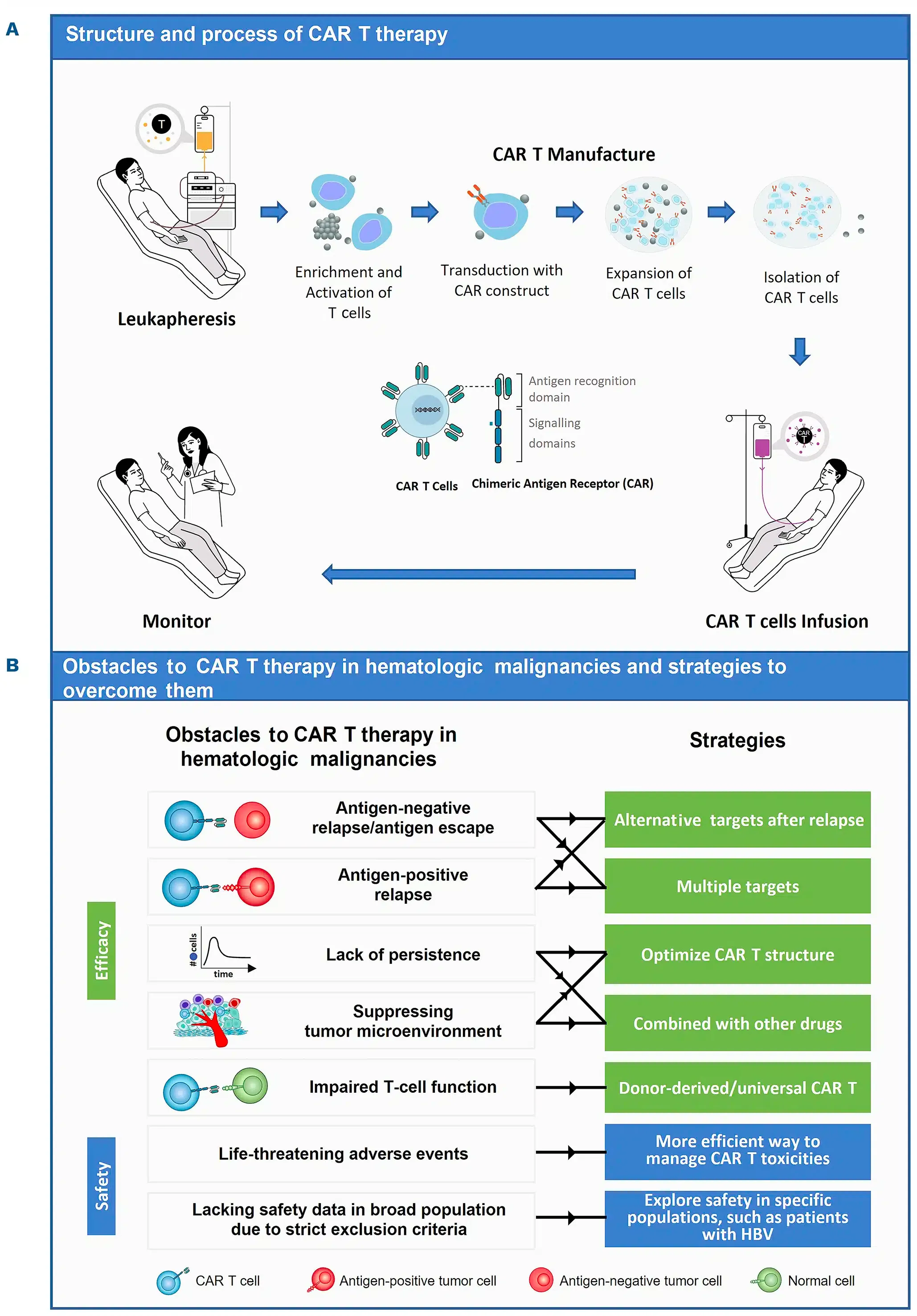
Chimeric Antigen Receptor (CAR) T-cell therapy has changed the course of treatment for numerous hematologic malignancies like leukemia, lymphoma, and multiple myeloma. China is at the forefront of CAR T-cell research with the maximum number of registered CAR T-cell clinical trials in the world.
The clinical triumphs notwithstanding, disease relapse, manufacturing complexities, and issues related to safety are some of the challenges remaining. The article discusses China’s experience with CAR T-cell therapy and suggests strategies to make its efficacy and safety in treating hematologic cancer stronger.
Over the past few decades, hematologic malignancy treatment has come a long way. Despite that, morbidity and mortality have still been very high. With knowledge of molecular genetics, our insight into how the immune system and cancer cells interact has heightened our awareness of T cells as the key to immunotherapy. Adoptive cell therapies, specifically with genetically modified CARs, have been constructed in order to specifically target cancer cells and elicit particular immune reactions.
CAR T-cell treatments have shown stunning effectiveness in malignancies such as acute lymphoblastic leukemia (ALL), large B-cell lymphoma (LBCL), and multiple myeloma (MM), revolutionizing cancer immunotherapy. Of note, China is now a CAR T-cell hotspot, with multiple clinical trials investigating diverse targets and approaches.
Despite promising outcomes, CAR T-cell therapy faces several challenges:
Disease Relapse: Some patients experience relapse due to antigen loss or the emergence of antigen-negative tumor variants.
Manufacturing Complexities: Producing CAR T cells involves intricate processes, including T-cell collection, genetic modification, expansion, and reinfusion, which can be time-consuming and costly.
Safety Concerns: Adverse events like cytokine release syndrome (CRS) and neurotoxicity pose significant risks, necessitating effective management strategies.
To overcome these challenges, Chinese researchers and clinicians have implemented several strategies:
Targeting Multiple Antigens: Developing CAR T cells that target multiple antigens can reduce the risk of relapse due to antigen loss.
Improving Manufacturing Processes: Streamlining production through automated systems and optimizing protocols can enhance efficiency and reduce costs.
Enhancing Safety Profiles: Implementing safety switches and developing strategies to manage adverse events can improve patient outcomes.
Overview of CAR T Cell therapy in China
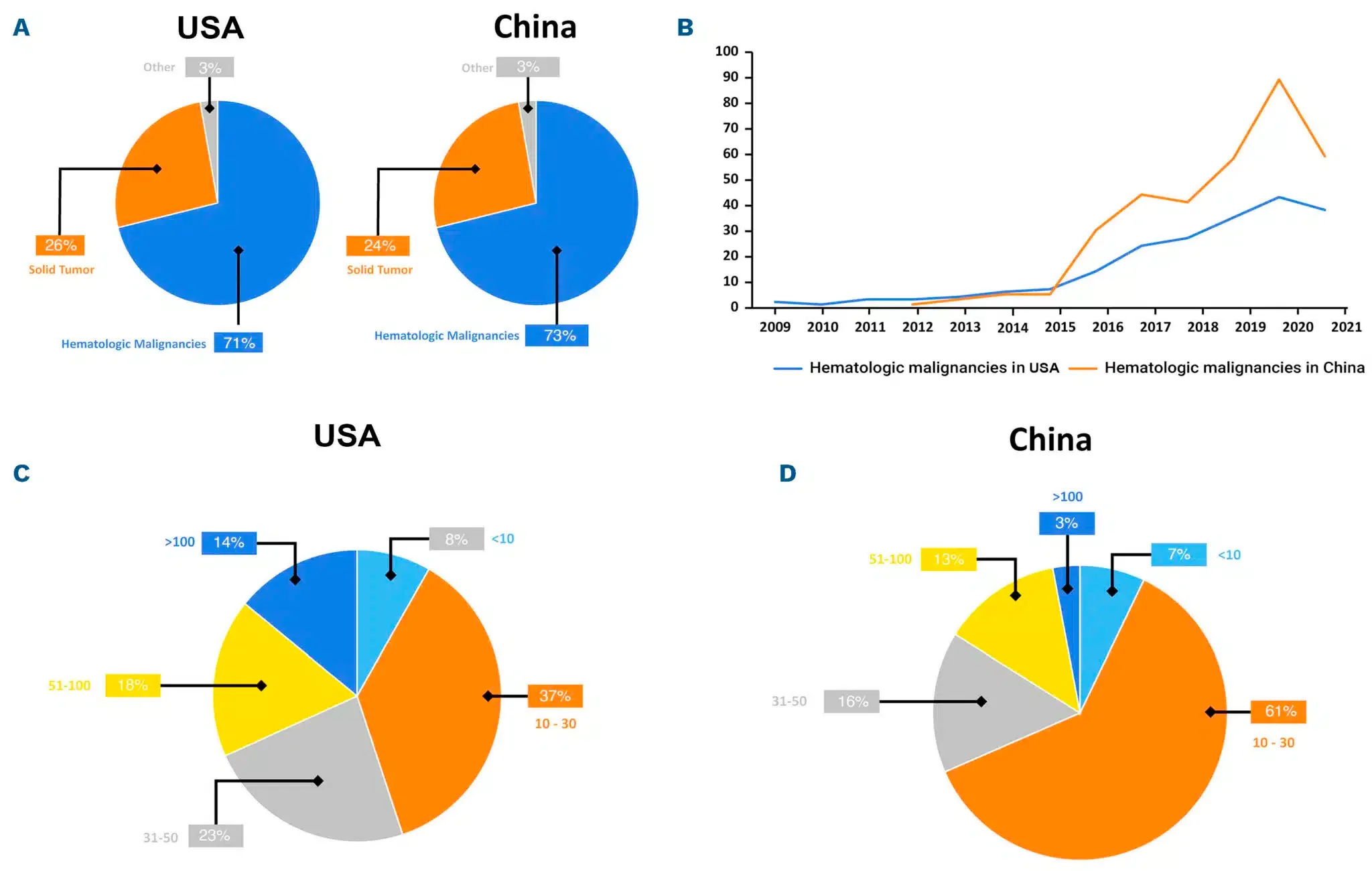
China has surpassed the USA in the number of CAR T-cell clinical studies, particularly in hematologic malignancies. As of December 2022, there were 458 CAR T-cell trials from China registered on ClinicalTrials.gov, with 73% focused on hematologic malignancies. CD19 and B-cell maturation antigen (BCMA) are the most common targets in Chinese trials. Compared to the USA, China has a higher proportion of trials using multi-target CAR T cells.
Approved CAR T Cell therapies in China
Two CD19-targeted CAR T-cell therapies have been approved in China for large B-cell lymphoma:
Axicabtagene ciloleucel (Yescarta)
Relmacabtagene autoleucel (Carteyva)
Strategies to improve CAR T Cell therapy
Acute Lymphoblastic Leukemia
Allogeneic CAR T cells to overcome limitations of autologous therapy
Universal off-the-shelf CAR T cells
Targeting CD7 for T-cell ALL
Combining multiple targets (e.g. CD19/CD22) to prevent antigen escape
Optimizing CAR design with different co-stimulatory domains
Acute Myeloid Leukemia
Exploring targets like CD33, CD38, CLL1, and CD123
CLL1-targeted CAR T cells showed promise in pediatric AML
Lymphoma
CD19 remains the primary target, with 50-100% overall response rates
Multi-target approaches combining CD19 with CD22, CD20, etc.
Personalized multi-CAR T-cell regimens based on patient’s tumor antigen profile
Combining CAR T cells with other therapies like chemotherapy or radiation
Armored CAR T cells to overcome inhibitory tumor microenvironment
Multiple Myeloma
BCMA-targeted CAR T cells have shown great success
Dual-epitope binding CAR T cells (e.g. LCAR-B38M)
Combining BCMA with other targets like CD19 or CD38
Fourth-generation CAR T cells expressing additional cytokines
Challenges and future direction
Despite promising results, several challenges remain:
Relapse and resistance
Management of cytokine release syndrome (CRS) and neurotoxicity
Manufacturing complexities and high costs
Limited efficacy in solid tumors
Future research is focused on:
Optimizing CAR designs and manufacturing processes
Developing off-the-shelf allogeneic products
Combining CAR T cells with other therapies
Exploring new targets and multi-target approaches
Improving management of adverse events
How CancerFax Helps
CancerFax is a specialist cancer access and patient-navigation platform. We help patients and families understand their options, organise medical records, coordinate hospital communication, and support cross-border treatment planning where appropriate.
We help collect and organise reports, scans, pathology, biomarker results, and treatment history for structured case review.
We communicate with hospitals or trial teams to assess whether a case may be suitable for further screening.
We support appointment coordination, document submission, translation, and direct communication with international departments.
For international patients, we help with practical coordination — travel planning, hospital admission guidance, and local support.
If this option is not suitable, we help explore other relevant treatments, clinical trials, or advanced care pathways.
From inquiry through to follow-up, our coordinators provide a single point of contact for the family.
CancerFax does not guarantee treatment access, eligibility, or clinical outcome. Our role is to help patients access accurate information, structured review, and appropriate specialist pathways.

About Dr. Nishant Mittal
Dr. Nishant Mittal is a highly accomplished researcher with over 13 years of experience in the fields of cardiovascular biology and cancer research. Significant contributions to stem cell biology, developmental biology, and innovative research techniques mark his career. Research Highlights Dr. Mittal's research has focused on several key areas: 1) Cardio…
✓ Reviewed for medical accuracy by the CancerFax review panel.
Medical Disclaimer
This article is for educational purposes only and should not replace medical advice, diagnosis, or treatment from a qualified oncology specialist. Every patient's case is different. Treatment decisions should always be made after a review of complete medical records by the treating medical team.
Treatment availability, eligibility, timelines, and access can change. Any clinical trial participation depends on detailed review and approval by the trial hospital or investigator.