

In this article
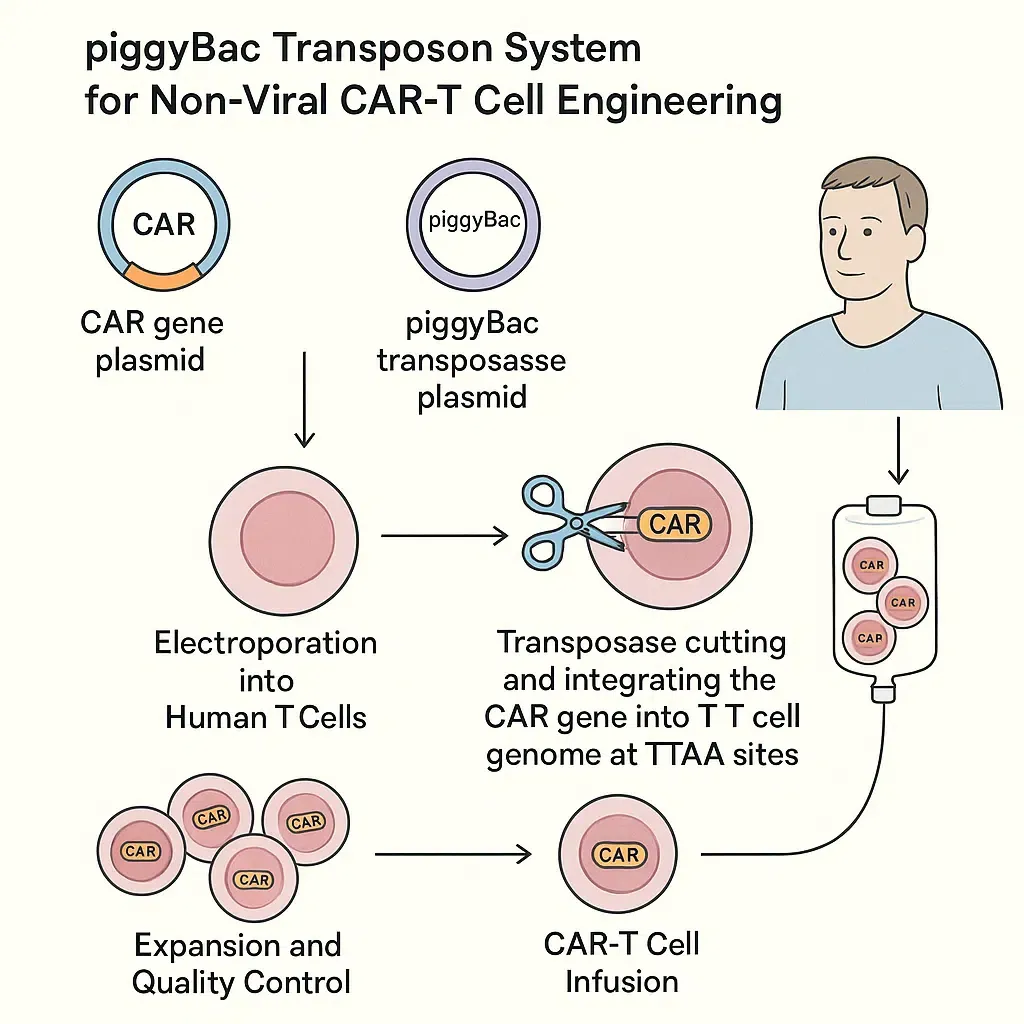
The PiggyBac transposon system is a non-viral gene delivery tool that enables the insertion of specific genes into host genomes. Originally discovered in insects, PiggyBac has gained wide popularity in biomedical research due to its ability to carry large DNA sequences and integrate them efficiently into a host's genome without disrupting essential genes.
Unlike regular viral vectors that can cause immune reactions and unwanted changes in DNA, PiggyBac provides a safe, accurate, and affordable way to modify genes, which is a significant advancement for cancer research and treatments.
Large Cargo Capacity
PiggyBac can carry up to 100 kb of foreign DNA, making it suitable for delivering multiple or large therapeutic genes.
Precise Integration
It integrates specifically at TTAA sites, reducing the risk of disrupting essential host genes.
Removability
The system allows excision of inserted genes without leaving a footprint, an essential feature for temporary gene expression applications or reversible gene therapies.
Non-Viral and Cost-Effective
Unlike viral vectors, PiggyBac systems are easier to produce, scalable, and less immunogenic, making them ideal for clinical use.
1. CAR T-Cell Therapy Enhancement
PiggyBac is gaining traction in CAR T-cell therapy manufacturing due to its:
High transfection efficiency
Low toxicity
Ability to insert multiple genes (e.g., CAR + cytokine genes)
Clinical trials in hematological cancers like leukemia and lymphoma have already shown encouraging results using PiggyBac-engineered CAR T-cells.
2. Gene Therapy and Tumor Suppressor Restoration
PiggyBac can be used to reintroduce tumor suppressor genes like TP53 or RB1 in cancer cells. It has been explored in preclinical studies for:
Liver cancer
Pancreatic cancer
Glioblastoma
3. Modeling Cancer in Animals
We also use the system to develop cancer models in mice by introducing oncogenes or disrupting tumor suppressors. These models are vital for studying cancer progression and testing therapies.
4. Combination with CRISPR for Precision Oncology
PiggyBac and CRISPR-Cas9 can work together for very precise gene editing, making it possible to fix mutations that cause cancer or add helpful genes with amazing accuracy.
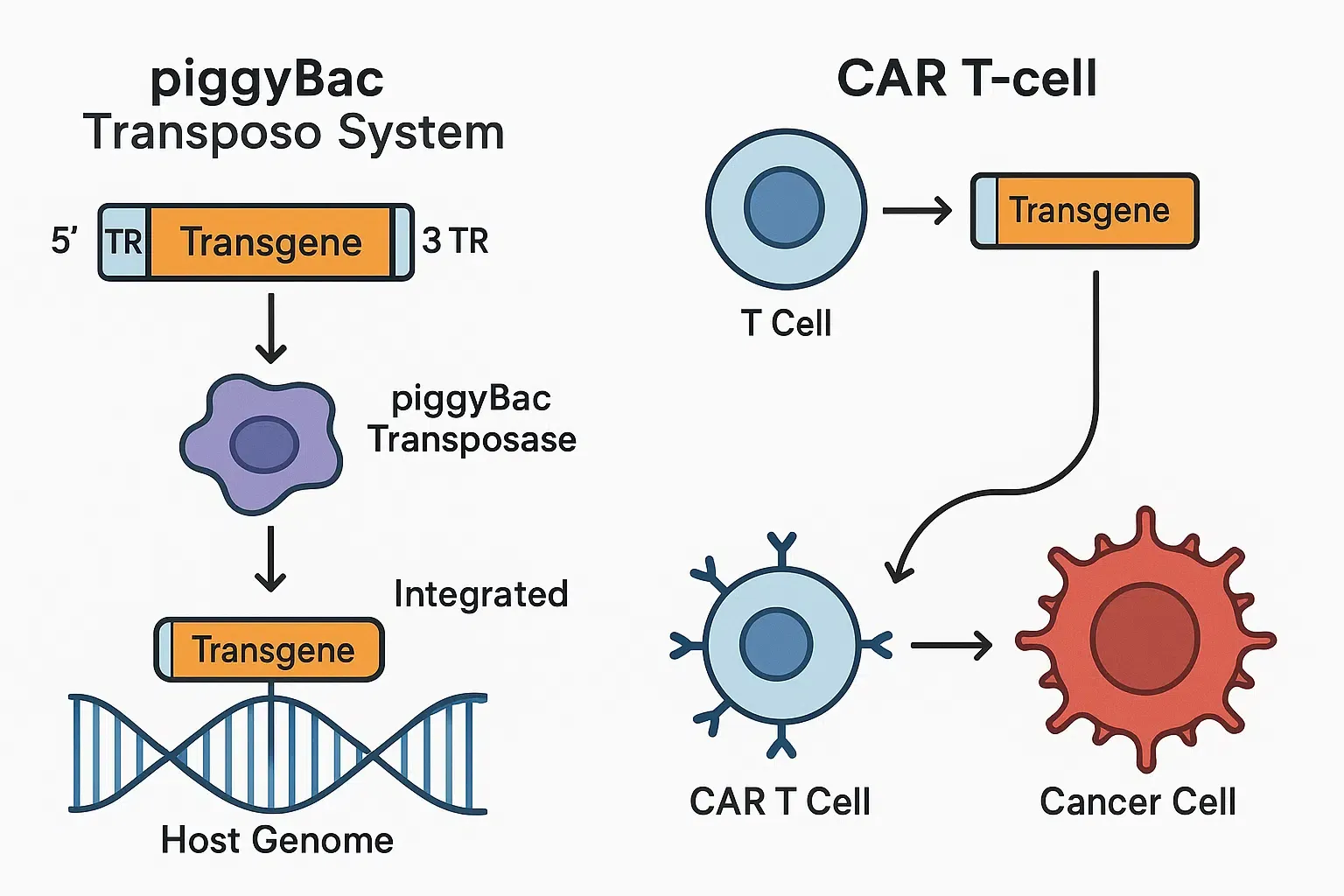
China and the United States are leading the way in PiggyBac-based CAR T-cell therapy trials, particularly for:
Acute lymphoblastic leukemia (ALL)
Multiple myeloma
Solid tumors like ovarian and pancreatic cancer
Notable institutions involved:
Fudan University Cancer Center, Shanghai
Peking University
MD Anderson Cancer Center, USA
Many biotech companies are developing next-generation cell and gene therapies using PiggyBac platforms, such as Poseida Therapeutics, which has multiple candidates in phase I/II trials.
Despite its promise, PiggyBac faces some challenges:
- Risk of insertional mutagenesis, though lower than viral vectors
- Need for better target specificity
- Regulatory hurdles for clinical gene therapy approval
However, advances in targeted delivery and genome editing are actively addressing these issues.
We expect PiggyBac to play a crucial role in personalized cancer therapies, especially for late-stage and refractory cancers where traditional therapies fail.
The PiggyBac Transposon System represents an important milestone in gene therapy and cancer immunotherapy. With ongoing trials and growing clinical acceptance, it holds immense potential in the fight against cancer—especially in areas where cost-effective, scalable, and safe genetic modification is essential.
How CancerFax Helps
CancerFax is a specialist cancer access and patient-navigation platform. We help patients and families understand their options, organise medical records, coordinate hospital communication, and support cross-border treatment planning where appropriate.
We help collect and organise reports, scans, pathology, biomarker results, and treatment history for structured case review.
We communicate with hospitals or trial teams to assess whether a case may be suitable for further screening.
We support appointment coordination, document submission, translation, and direct communication with international departments.
For international patients, we help with practical coordination — travel planning, hospital admission guidance, and local support.
If this option is not suitable, we help explore other relevant treatments, clinical trials, or advanced care pathways.
From inquiry through to follow-up, our coordinators provide a single point of contact for the family.
CancerFax does not guarantee treatment access, eligibility, or clinical outcome. Our role is to help patients access accurate information, structured review, and appropriate specialist pathways.

About Sai Sree
✓ Reviewed for medical accuracy by the CancerFax review panel.
Medical Disclaimer
This article is for educational purposes only and should not replace medical advice, diagnosis, or treatment from a qualified oncology specialist. Every patient's case is different. Treatment decisions should always be made after a review of complete medical records by the treating medical team.
Treatment availability, eligibility, timelines, and access can change. Any clinical trial participation depends on detailed review and approval by the trial hospital or investigator.