
In this article
FDA Approval of Talazoparib and Enzalutamide for HRR-Mutated mCRPC
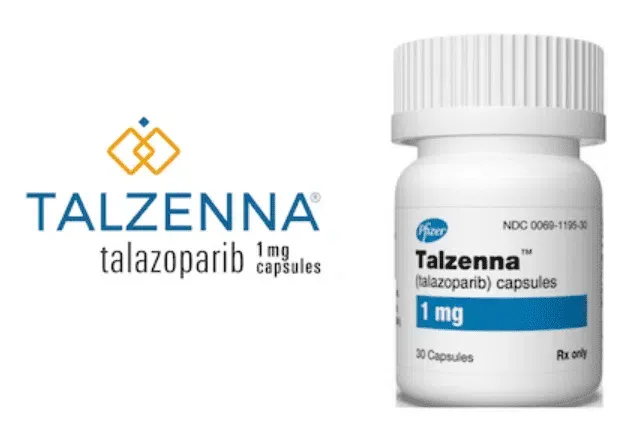
July 2023: The Food and Drug Administration cleared talazoparib (Talzenna, Pfizer, Inc.) with enzalutamide for homologous recombination repair (HRR) gene mutations in metastatic castration-resistant prostate cancer (mCRPC).
TALAPRO-2 (NCT03395197), a randomised, double-blind, placebo-controlled, multi-cohort study with 399 patients with HRR gene-mutated mCRPC, looked at how well the drug worked. The patients were given either enzalutamide 160 mg daily plus talazoparib 0.5 mg daily or a dummy every day. Patients had to get an orchiectomy first, and if that didn’t happen, they were given gonadotropin-releasing hormone (GnRH) analogues. Patients who had received systemic treatment for mCRPC before were not allowed, but patients who had received CYP17 inhibitors or docetaxel before for metastatic castration-sensitive prostate cancer (mCSPC) were allowed. Prior treatment with a CYP17 inhibitor or docetaxel changed how the randomization was done. HRR genes (ATM, ATR, BRCA1, BRCA2, CDK12, CHEK2, FANCA, MLH1, MRE11A, NBN, PALB2, or RAD51C) were looked at using next-generation sequencing tests based on tumour tissue and/or circulating tumour DNA (ctDNA).
TALAPRO-2 Clinical Trial Efficacy and Results
Radiographic progression-free survival (rPFS) according to RECIST version 1.1 for soft tissue and Prostate Cancer Working Group 3 standards for bone was the most important measure of effectiveness. This was done by a blinded, independent central review.
In the HRR gene-mutated group, talazoparib with enzalutamide showed a statistically significant improvement in rPFS compared to placebo with enzalutamide, with a median of not reached vs. 13.8 months (HR 0.45; 95% CI: 0.33, 0.61; p0.0001). In an exploratory study by BRCA mutation status, the hazard ratio for rPFS in patients with BRCA-mutated mCRPC (n=155) was 0.20 (95% CI: 0.11–0.36) and in patients with non-BRCAm HRR gene-mutated mCRPC, it was 0.72 (0.49–1.07).
Laboratory abnormalities and side effects that happened more than 10% of the time were fatigue, decreased platelets, decreased calcium, nausea, decreased appetite, decreased sodium, decreased phosphate, fractures, decreased magnesium, dizziness, increased bilirubin, decreased potassium, and dysgeusia. All 511 patients with mCRPC who were treated with talazoparib and enzalutamide on TALAPRO-2 needed a blood transfusion, with 22% needing more than one. Two patients were found with myelodysplastic syndrome/acute myeloid leukaemia (MDS/AML).
The suggested dose of talazoparib is 0.5 mg taken orally once a day with enzalutamide until the disease gets worse or the side effects are too bad. Enzalutamide should be taken by mouth once a day at an amount of 160 mg. Patients who took talazoparib and enzalutamide should have also taken a GnRH analogue or had both of their testicles removed.
View full prescribing information for Talzenna
How CancerFax Helps
CancerFax is a specialist cancer access and patient-navigation platform. We help patients and families understand their options, organise medical records, coordinate hospital communication, and support cross-border treatment planning where appropriate.
We help collect and organise reports, scans, pathology, biomarker results, and treatment history for structured case review.
We communicate with hospitals or trial teams to assess whether a case may be suitable for further screening.
We support appointment coordination, document submission, translation, and direct communication with international departments.
For international patients, we help with practical coordination — travel planning, hospital admission guidance, and local support.
If this option is not suitable, we help explore other relevant treatments, clinical trials, or advanced care pathways.
From inquiry through to follow-up, our coordinators provide a single point of contact for the family.
CancerFax does not guarantee treatment access, eligibility, or clinical outcome. Our role is to help patients access accurate information, structured review, and appropriate specialist pathways.

About Dr. Nishant Mittal
Dr. Nishant Mittal is a highly accomplished researcher with over 13 years of experience in the fields of cardiovascular biology and cancer research. Significant contributions to stem cell biology, developmental biology, and innovative research techniques mark his career. Research Highlights Dr. Mittal's research has focused on several key areas: 1) Cardio…
✓ Reviewed for medical accuracy by the CancerFax review panel.
Medical Disclaimer
This article is for educational purposes only and should not replace medical advice, diagnosis, or treatment from a qualified oncology specialist. Every patient's case is different. Treatment decisions should always be made after a review of complete medical records by the treating medical team.
Treatment availability, eligibility, timelines, and access can change. Any clinical trial participation depends on detailed review and approval by the trial hospital or investigator.