

In this article
Chimeric Antigen Receptor (CAR) T cell therapy has transformed cancer treatment by genetically modifying a patient’s own T cells to target and destroy cancer cells. Although this autologous process has been extremely successful, it also poses several major challenges, such as manufacturing complexity, costliness, and delay that can be harmful to patients with fast-growing diseases. In order to overcome these problems, scientists are looking into the use of donor-derived, or allogeneic, T cells as an alternative. This article explores the potential of donor T cells in CAR T cell therapy, considering their advantages, challenges, and current developments in the field.
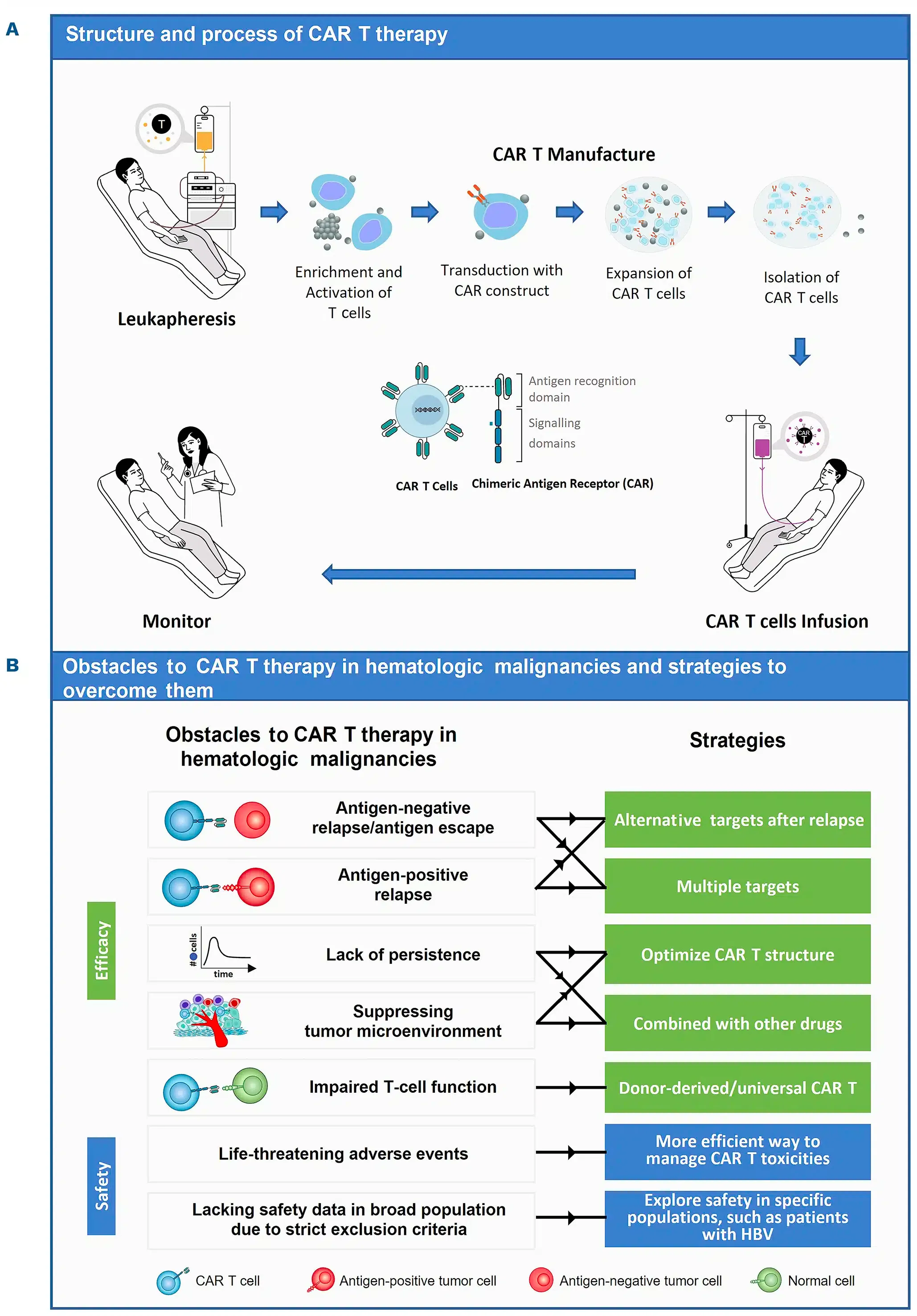
Allogeneic CAR T cell therapy involves using T cells from a healthy donor, which are genetically modified to express a CAR specific to antigens on tumor cells. This approach offers several potential benefits over autologous therapies:
Immediate Availability: Donor T cells can be prepared and stored in advance, providing an “off-the-shelf” therapy ready for immediate use. This is crucial for patients who cannot afford the time required to harvest and engineer their own T cells.
Scalability and Cost-Effectiveness: Producing CAR T cells from healthy donors allows for large-scale manufacturing, potentially reducing production costs and making the therapy more accessible.
Consistent Quality: Donor-derived T cells can be sourced from young, healthy individuals, ensuring a consistent and robust starting material, which may lead to more effective therapies.
Despite its promise, the allogeneic approach presents unique challenges that must be addressed:
Graft-versus-Host Disease (GvHD): Donor T cells may recognize the recipient’s tissues as foreign, leading to GvHD, a potentially life-threatening condition.
Host-versus-Graft Rejection: The recipient’s immune system may attack and eliminate the infused donor T cells, reducing the therapy’s efficacy.
Immune Compatibility: Ensuring compatibility between donor and recipient to minimize immune reactions adds complexity to donor selection and therapy design.
Researchers are developing innovative strategies to mitigate these challenges:
Genetic Engineering to Prevent GvHD: By deleting the T cell receptor (TCR) genes in donor T cells, scientists aim to prevent these cells from recognizing and attacking the recipient’s healthy tissues, thereby reducing the risk of GvHD.
Immune Evasion Techniques: Incorporating genes that help donor T cells evade the recipient’s immune system can enhance their persistence and therapeutic efficacy.
Universal Donor Cells: Developing “universal” CAR T cells that lack certain immune markers may allow them to be used across multiple recipients without the need for strict matching, broadening their applicability.
The field of allogeneic CAR T cell therapy is rapidly evolving, with several promising developments:
Gene Editing Technologies: Techniques like CRISPR/Cas9 are being employed to precisely edit donor T cells, knocking out genes responsible for GvHD and immune rejection.
Clinical Trials: Numerous clinical trials are underway to evaluate the safety and efficacy of allogeneic CAR T cell therapies in various cancers. Early results have shown potential, with some patients achieving remission.
Combination Therapies: Combining allogeneic CAR T cells with other treatments, such as checkpoint inhibitors, is being explored to enhance anti-tumor responses and overcome resistance mechanisms.
Donor-derived CAR T cell therapy also has great potential as a less available and more scalable option than autologous methods. Although complications such as GvHD and immune rejection continue to be issues, advances in research and clinical care are helping unlock the potential for safer, more potent allogeneic treatments. As research develops, allogeneic CAR T cells will potentially be at the forefront of cancer treatment, bringing hope to cancer patients across the globe.
How CancerFax Helps
CancerFax is a specialist cancer access and patient-navigation platform. We help patients and families understand their options, organise medical records, coordinate hospital communication, and support cross-border treatment planning where appropriate.
We help collect and organise reports, scans, pathology, biomarker results, and treatment history for structured case review.
We communicate with hospitals or trial teams to assess whether a case may be suitable for further screening.
We support appointment coordination, document submission, translation, and direct communication with international departments.
For international patients, we help with practical coordination — travel planning, hospital admission guidance, and local support.
If this option is not suitable, we help explore other relevant treatments, clinical trials, or advanced care pathways.
From inquiry through to follow-up, our coordinators provide a single point of contact for the family.
CancerFax does not guarantee treatment access, eligibility, or clinical outcome. Our role is to help patients access accurate information, structured review, and appropriate specialist pathways.

About Dr. Nishant Mittal
Dr. Nishant Mittal is a highly accomplished researcher with over 13 years of experience in the fields of cardiovascular biology and cancer research. Significant contributions to stem cell biology, developmental biology, and innovative research techniques mark his career. Research Highlights Dr. Mittal's research has focused on several key areas: 1) Cardio…
✓ Reviewed for medical accuracy by the CancerFax review panel.
Medical Disclaimer
This article is for educational purposes only and should not replace medical advice, diagnosis, or treatment from a qualified oncology specialist. Every patient's case is different. Treatment decisions should always be made after a review of complete medical records by the treating medical team.
Treatment availability, eligibility, timelines, and access can change. Any clinical trial participation depends on detailed review and approval by the trial hospital or investigator.